California's Accessory Dwelling Unit (ADU) regulations have evolved significantly since the state first began relaxing restrictions in 2016. As of 2026, California has some of the most permissive ADU laws in the country—but navigating them still requires understanding the interplay between state law and local jurisdiction requirements.
The State Framework
California state law establishes minimum standards that all jurisdictions must follow, but local governments can add requirements as long as they don't conflict with state law. Key state provisions include:
Size Limits
- Attached ADUs: Up to 1,000 sq ft or 50% of existing living area, whichever is less
- Detached ADUs: Up to 1,200 sq ft
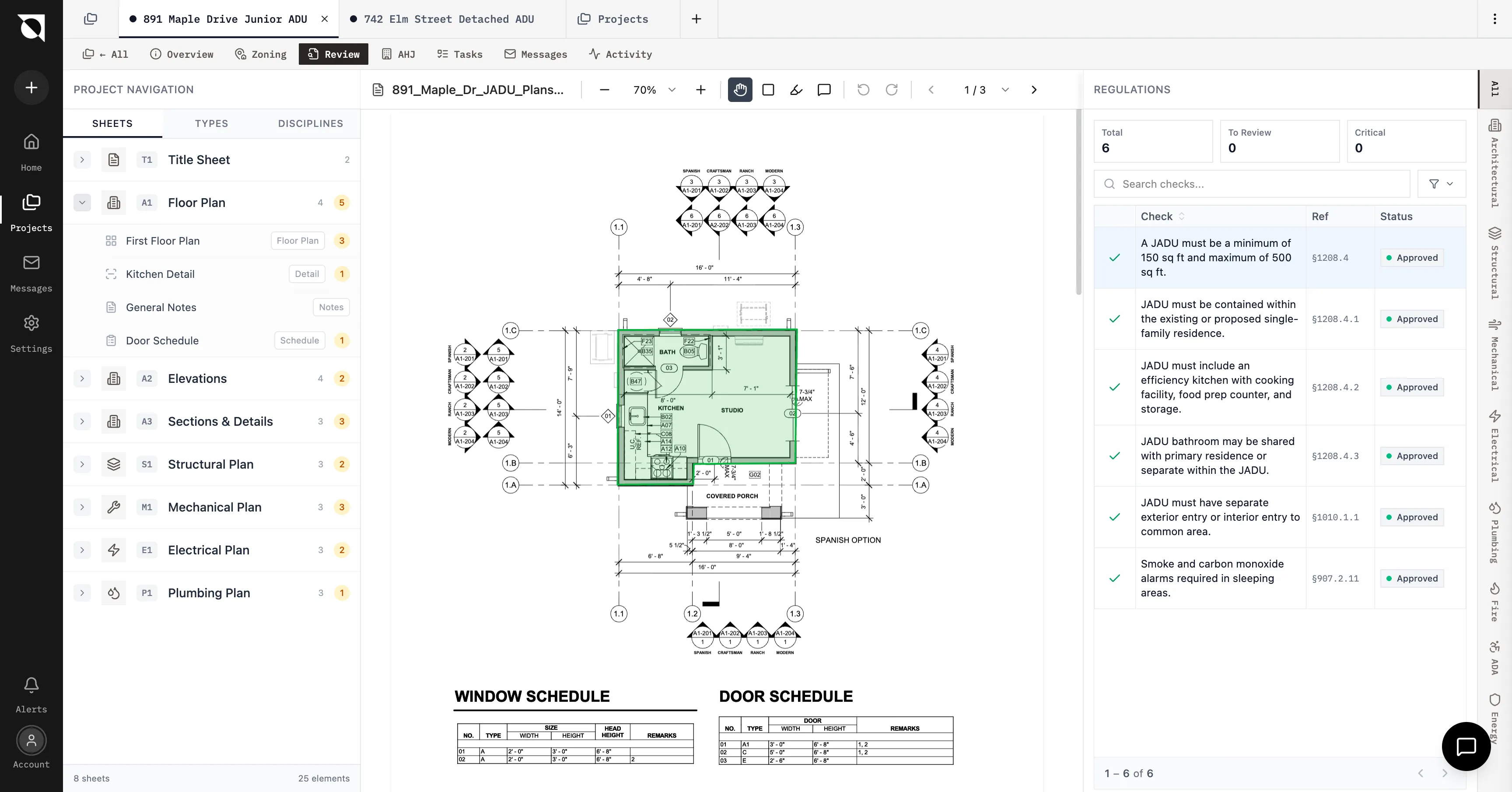
- Junior ADUs (JADUs): Up to 500 sq ft, must be within existing structure
Setback Requirements
- State minimum: 4 feet from side and rear property lines for units under 16 feet tall
- No setback required for conversions of existing structures
- Front setback follows existing zoning
Parking
- No additional parking required if ADU is within 1/2 mile of public transit
- No parking required for conversions of existing structures
- Maximum of 1 space per ADU in other situations
Where Local Rules Still Apply
Despite state preemption, local jurisdictions retain control over several important areas:
Design Standards: Cities can impose design review for visible facades, though they cannot require specific architectural styles that would make ADUs economically infeasible.
Impact Fees: Local governments can charge impact fees for ADUs over 750 sq ft, though fees must be proportional to unit size.
Utility Connections: Requirements for separate utility meters and connections vary by jurisdiction and can significantly affect construction costs.
Fire Safety: Properties in Very High Fire Hazard Severity Zones may face additional requirements for fire-resistant materials and defensible space.
Common Pitfalls
Based on permit application data, these are the most frequent issues that cause ADU permit delays:
- **Lot coverage violations**: Forgetting to include existing structures in lot coverage calculations
- **Setback errors**: Measuring from the wrong reference point (property line vs. easement)
- **Utility capacity**: Not verifying sewer lateral capacity before designing
- **Height calculations**: Incorrectly measuring height on sloped lots
- **Overlay conflicts**: Missing restrictions from hillside, coastal, or historic overlays
The Pre-Check Process
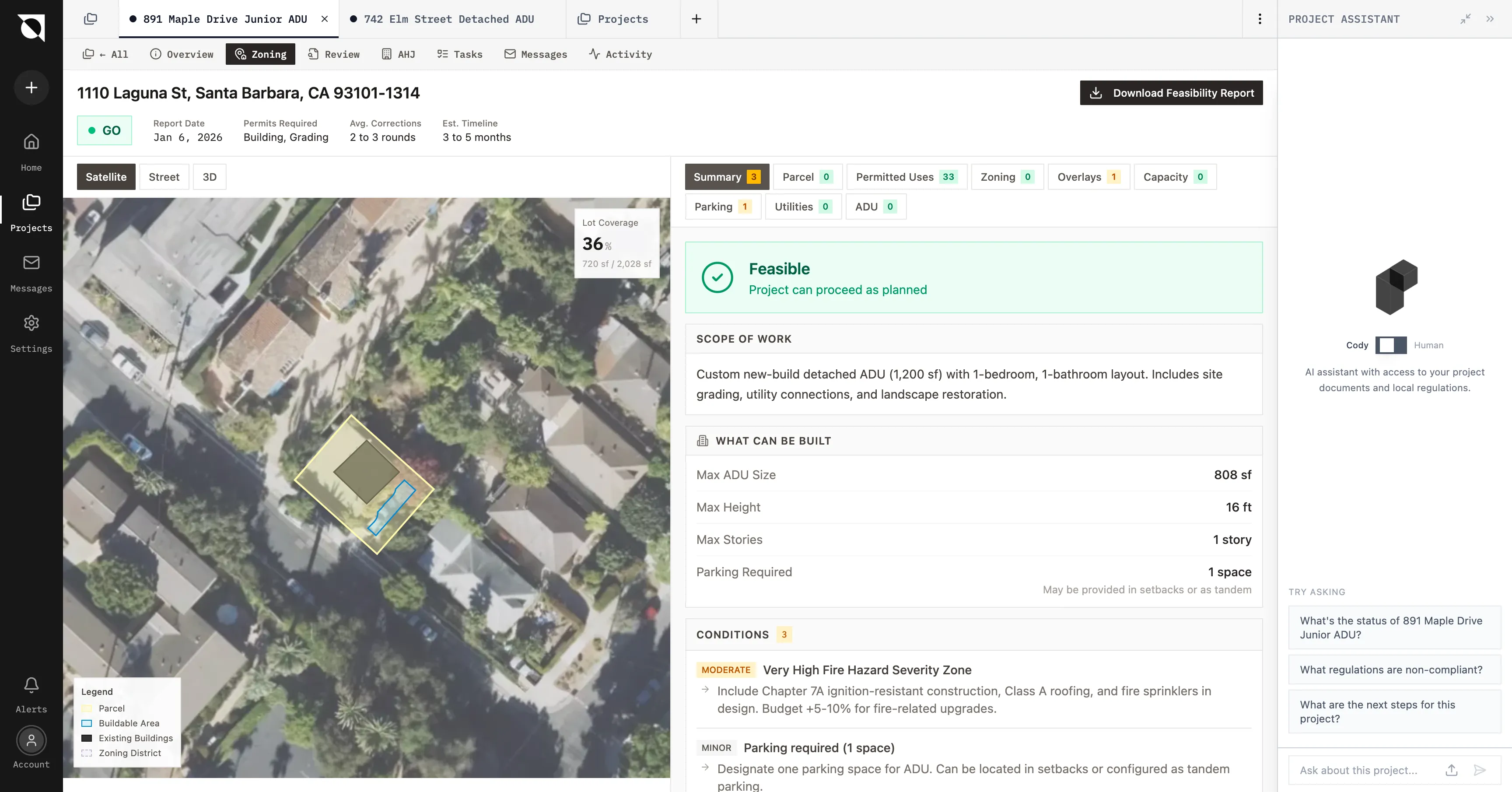
Before committing to ADU design and engineering, a thorough feasibility analysis should confirm:
- [ ] Zoning allows ADUs (nearly universal in residential zones, but verify)
- [ ] Property is not in overlay district with additional restrictions
- [ ] Lot size meets minimum requirements
- [ ] Existing development leaves room for ADU within lot coverage limits
- [ ] Setback envelope provides buildable area
- [ ] Utility connections are feasible and permitted
- [ ] Parking situation is addressed (or exemption applies)
Timeline Expectations
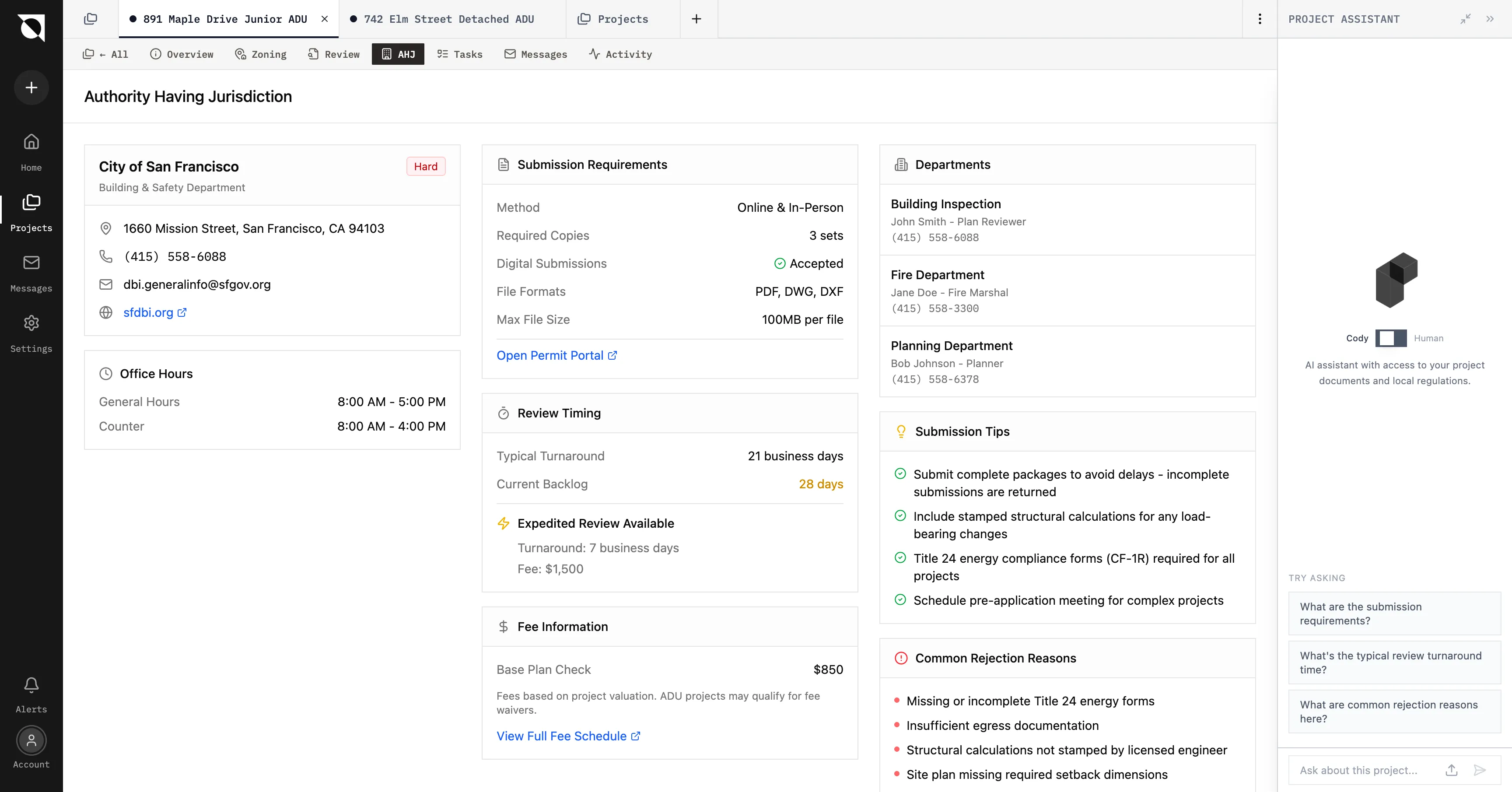
Under state law, ADU permit applications that comply with all requirements must be approved or denied within 60 days. In practice, this timeline only applies to complete applications that don't require corrections.
Realistic timelines for well-prepared applications:
- Pre-application consultation: 1-2 weeks
- Plan preparation: 2-4 weeks
- Permit review: 4-8 weeks
- Revisions (if needed): 2-4 weeks per cycle
Tools for Success
The most successful ADU projects share a common approach: thorough due diligence before design begins. Using zoning analysis tools to verify requirements upfront prevents costly mid-project changes and resubmissions.
Rescope's ADU feasibility reports provide jurisdiction-specific analysis including maximum unit size, setback envelope mapping, parking requirements, and overlay restrictions—the information needed to brief your architect before they start drawing.
What's Next
California continues to refine ADU regulations. Recent legislative discussions have focused on:
- Further streamlining the approval process
- Addressing ADU financing challenges
- Clarifying rules for ADU sales (separate from primary residence)
- Expanding by-right approvals
We'll update this guide as regulations evolve.